The competence profile identifies key requirements for educators in citizenship and non-formal education and describes the competences they should possess in order to effectively design educational processes. A contribution to systematic quality development for non-formal civic education.
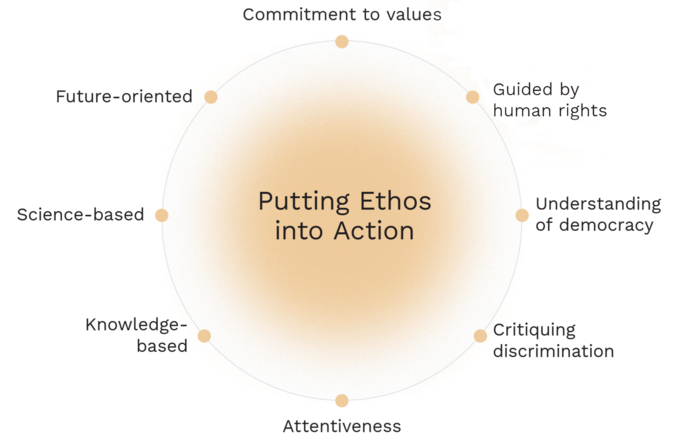
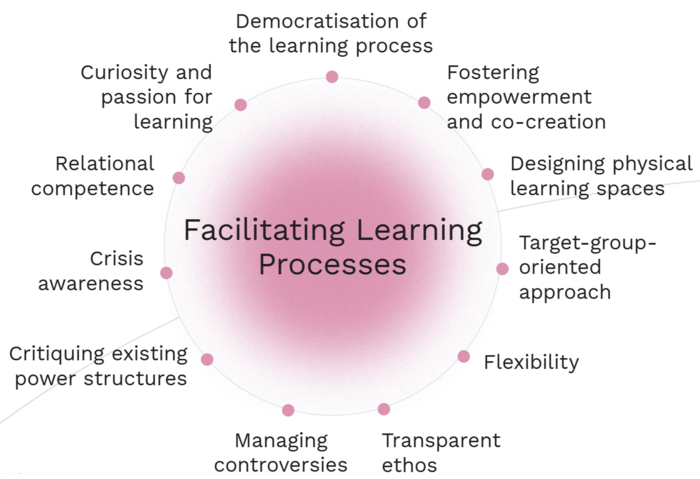
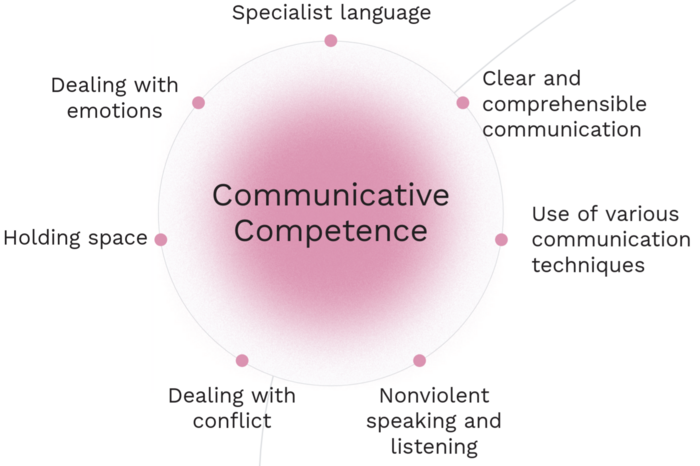
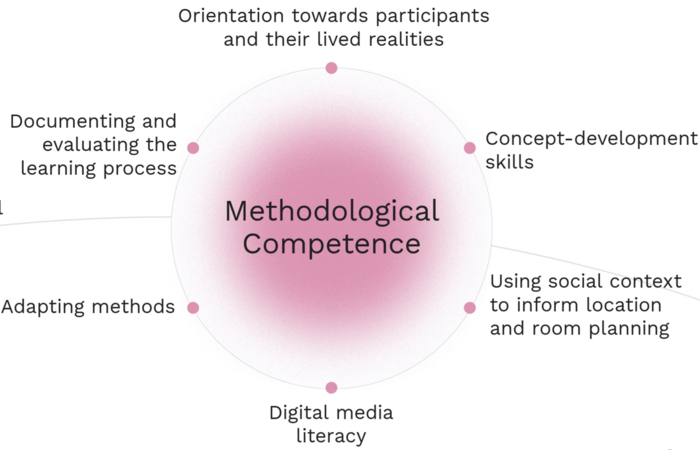
It thus serves as a framework for the further development of training and for quality assurance in education practice. The profile describes nine areas of competence:
Overview
- Putting Ethos into Action
- Facilitating Learning Processes
- Communicative Competence
- Methodological Competence
- Action-Focused Learning
- Personal Competence
- Working in Teams
- Learning to Learn
- Network-Building and Cooperation
- Organisational Competence
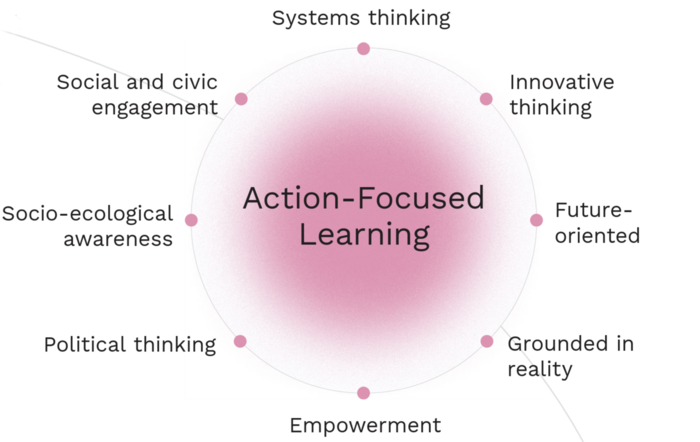
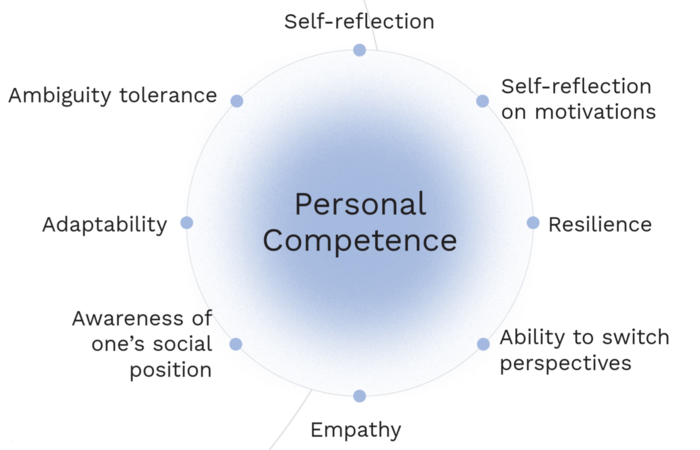
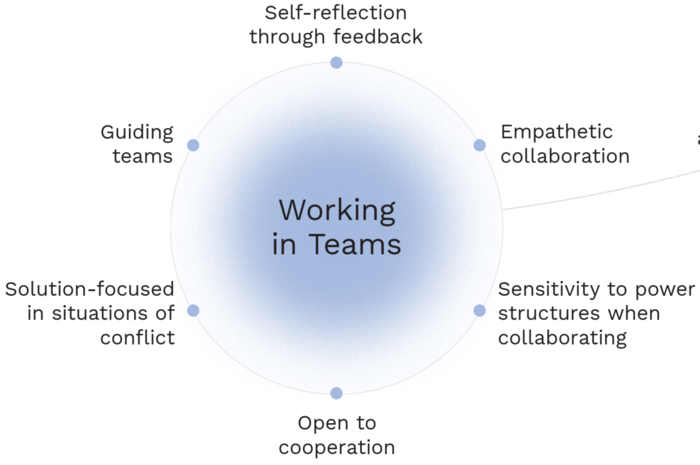
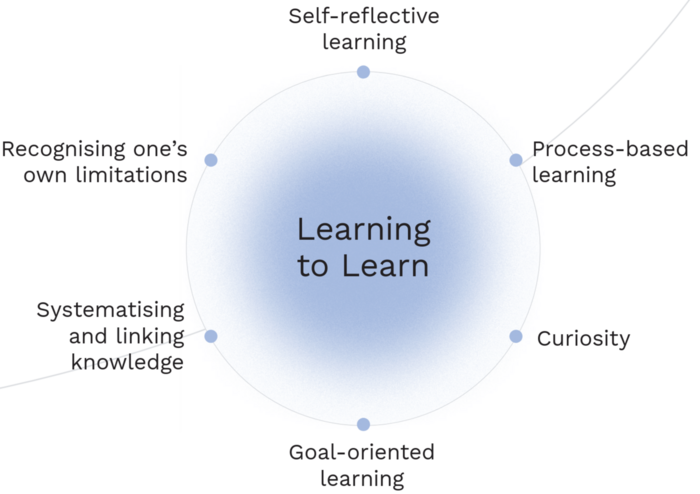
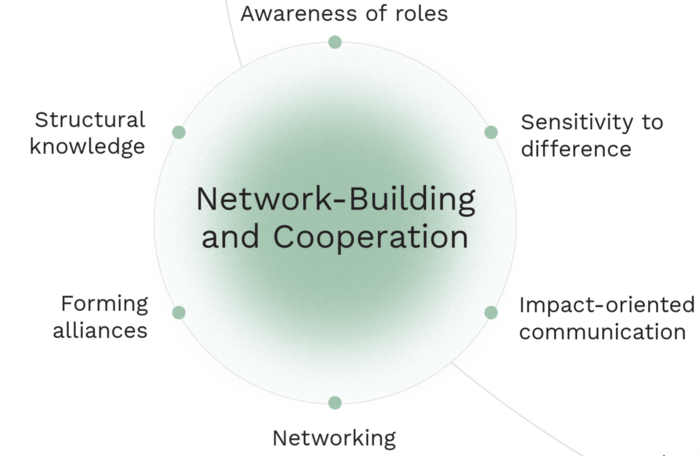
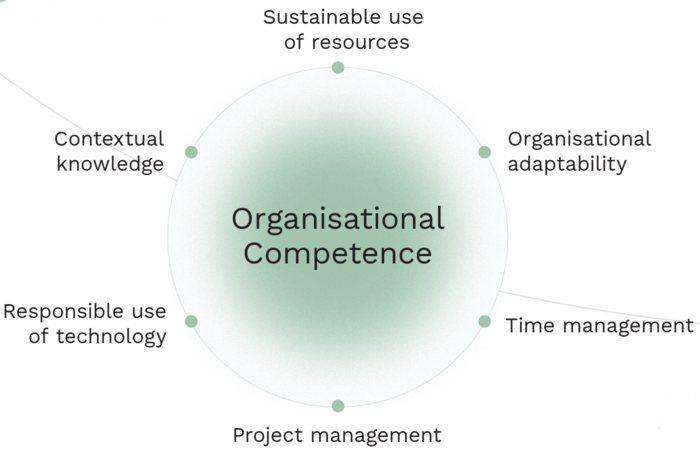
A Basis for Staff, Quality and Organisational Development
A systematic perspective on the competence(s) of professionals can be helpful in many ways.
- Personnel: self-reflection, impulses for further development and recruiting
- Pedagogy: contribution to understanding which aspects of a more complex pedagogical approach (such as non-formal civic education) are relevant and represented in one’s own context and where potential lies.
- Organisation: Understanding the expert roles and the relationship between different expert roles within an institution/organisation, and shaping this relationship.
- Tools: Planning and reflection tools can be derived from this and similar profiles.
- …
Since publication, we have been in dialogue with a large number of stakeholders, both from civic education and related fields.
If you are interested, please feel free to send me a non-binding email.
Pedagogical Competence as a Connecting Perspective
During the process of developing the competence profile, various stakeholders from the field of citizenship and democracy-related met regularly. In the course of these joint discussions on competences for pedagogues, exchanges and networking, topics and themes that play an important role in the practice of political education repeatedly came to the fore. Some of these discussions have been incorporated into the competence profile. Others were seen as a starting point for a technical discussion on the professionalisation of non-formal citizenship education and youth work and thus as a stimulus for further debate and engagement in the field.
During the development process, it became clear that there is a unifying pedagogical core: learning and empowering people to engage in sociopolitical issues and discussions and for democracy. Beyond that, citizenship and democracy-related education encompasses a wide variety of educational activities in different locations, focusing on different topics and involving different groups.
A trend towards division of labour was also observed. Educational work is being outsourced to freelancers more often than in the past, while staff in educational organisations is increasingly busy with management tasks. Both perspectives are taken into account in the profile. However, the profile is primarily dedicated to those who perform direct educational work. In other words, we want to use the profile to contribute to the recognition of educational professionals and to strengthen educational work structurally.
Another essential component and a recurring theme in the development process was the discussion of the ‘attitude’ of political educators. However, there were also different approaches here. On the one hand, attitude is fundamental. A professional attitude based on fundamental and human rights, oriented towards an understanding of democracy and directed against right-wing extremism and misanthropy, is the central foundation for any work in education for democratic citizenship. At the same time, there is an expectation that this attitude should be reflected in the concrete actions of professionals. In other words, the expectation is that the attitude of political educators should permeate all areas of competence. The ‘attitude’ of professionals cannot be the central motivation for political educators – at its core, it is about good pedagogy.
The competence profile offers opportunities for dialogue ad intersections between different action fields and pedagogies. However, it is strongly influenced by the perspective of intentional non-formal (extracurricular) citizenship and democracy-related youth education, which often takes place at third spaces in non-formal educational centres and youth centres. Of course, we have tried to include many perspectives, but whether we have succeeded in doing so is for others to judge – for example, those who offer more open-ended programmes, who work in non-location-specific settings, or who draw learning about democracy and sociopolitical issues from the situation at hand – for example, in international youth exchanges, experiential education, open social work, cultural practice, etc. The same applies to freelance educators or those whose job profile is more akin to that of a conference chair.
I am particularly interested in the exchange with the didactics and conceptual side of non-formal education, the discourses in social work and in democracy education. After all, despite reservations regarding funding, sociological distinctions or ideology, we must acknowledge that the differentiations that can be found especially in Germany are only of limited relevance to professionals, many of whom are active in several fields. Furthermore, contributing to a democratic (civic) culture is a shared task for everyone, regardless of their specific perspectives, resources and contexts.
Association of German Educational Institutions (AdB e. V., 2025). Competence Framework for Facilitators in Non-formal Civic Education. Berlin. Editors: Alina Jugenheimer, Nico Schneider, Nils-Eyk Zimmermann, in collaboration with Dorit Machell.
More about Competences: Overview
Grafik: Arbeitskreis deutscher Bildungsstätten/Bar Pacifico, Lizenz: Creative Commons CC-BY-SA